Unlock the healing power of your kitchen with natural ingredients and mindful cooking. Boost immunity, support digestion, and promote well-being with everyday ingredients like turmeric, garlic, and ginger. Transform your kitchen into your pharmacy.
Join our hands-on cooking and wellness sessions where ancient food wisdom meets modern health. Learn to use everyday ingredients to nourish, balance, and heal your body — all from your own kitchen.

Holistic Nutrition Chef Anita Shrestha teaches you how to craft meals based on Ayurvedic principles. Understand the doshas, seasonal eating, and how to prepare food that calms, energizes, and heals naturally.

Spices and condiments are nature's medicine cabinet, rich in antioxidants and essential nutrients that boost immunity, aid digestion, and improve heart health. Incorporating them into daily meals enriches taste and promotes overall well-being. They contain powerful compounds that support digestion, metabolism, and protect the body from free radicals.

In this soulful workshop, Wellness Educator Rita Gurung helps you rediscover the spiritual and emotional side of cooking. Learn how your energy, thoughts, and mood while preparing food directly influence its healing power.Through breathwork, intention-setting, and mindfulness techniques.

International Tourist
"Attending the 'Roots & Remedies' workshop changed the way I see food. I no longer just cook — I create with purpose. Ginger tea is now my go-to for headaches, and I've even helped my kids with cold remedies using only kitchen spices."

International Tourist
"The classes helped me slow down and pay attention to how food affects my energy. I used to feel tired after meals, but now I feel nourished. Learning about seasonal ingredients made a big difference in my health."

International Tourist
"I struggled with digestion for years, but no doctor ever told me about cumin and fennel water. After applying what I learned here, my symptoms are almost gone. I feel more energetic and emotionally lighter too."

Business Owner
"Running a business is stressful, but this retreat gave me the tools to manage stress better. The holistic approach and personalized attention made all the difference."

Artist
"The creative energy here is incredible! Surrounded by nature's beauty, I found new inspiration for my art. The community of like-minded souls made it even more special."

Wellness Enthusiast
"A peaceful escape surrounded by nature. The herbal garden, the quiet walks, and the organic meals made this retreat truly healing. I left feeling refreshed and grounded. "
International Tourist
"Attending the 'Roots & Remedies' workshop changed the way I see food. I no longer just cook — I create with purpose. Ginger tea is now my go-to for headaches, and I've even helped my kids with cold remedies using only kitchen spices."
International Tourist
"The classes helped me slow down and pay attention to how food affects my energy. I used to feel tired after meals, but now I feel nourished. Learning about seasonal ingredients made a big difference in my health."
International Tourist
"I struggled with digestion for years, but no doctor ever told me about cumin and fennel water. After applying what I learned here, my symptoms are almost gone. I feel more energetic and emotionally lighter too."
Business Owner
"Running a business is stressful, but this retreat gave me the tools to manage stress better. The holistic approach and personalized attention made all the difference."
Artist
"The creative energy here is incredible! Surrounded by nature's beauty, I found new inspiration for my art. The community of like-minded souls made it even more special."
Wellness Enthusiast
"A peaceful escape surrounded by nature. The herbal garden, the quiet walks, and the organic meals made this retreat truly healing. I left feeling refreshed and grounded. "
Rosemary is a fragrant, evergreen herb native to the Mediterranean region. With its needle-like leaves and woody aroma, it is a popular addition to roasted meats, vegetables, and breads. However, rosemary is more than just a culinary herb; it has a rich history in traditional medicine, where it was used for everything from improving memory to soothing muscle aches.
The health benefits of rosemary come from its high concentration of antioxidants and anti-inflammatory compounds, such as rosmarinic acid and carnosic acid. These compounds help neutralize harmful free radicals in the body and reduce inflammation. Rosemary is also known to stimulate circulation and has been traditionally used to improve digestion and relieve gas.
Rosemary's strong scent has also been linked to cognitive benefits, with studies suggesting that inhaling its aroma may improve concentration and memory. It can be used fresh or dried in cooking, brewed into a tea, or used as an essential oil for aromatherapy. Its diverse properties make it a truly versatile and beneficial plant.

Turmeric is a vibrant yellow-orange spice derived from the root of the Curcuma longa plant, a member of the ginger family. It has been a staple in South Asian cuisine, traditional medicine, and religious ceremonies for thousands of years. The spice is best known for its earthy, slightly bitter flavor and its potent healing properties, which come from a compound called curcumin.
Curcumin is the primary active ingredient in turmeric and is a powerful anti-inflammatory and antioxidant. It works by blocking the molecules that trigger inflammation in the body, which can help with conditions like arthritis and other inflammatory diseases. Its antioxidant effects also help protect the body's cells from damage caused by free radicals.
Beyond its anti-inflammatory benefits, turmeric is also used to aid digestion, support liver function, and boost the immune system. It can be easily incorporated into daily meals, teas, and smoothies, making it a versatile and accessible herb for promoting overall health and wellness.

Garlic, a species in the onion genus Allium, is one of the most widely used and recognizable culinary ingredients. It is prized for its strong, pungent flavor and aroma, which can enhance a vast array of dishes. Beyond its culinary uses, garlic has been revered for its health benefits for thousands of years, with ancient civilizations using it to treat various diseases.
The medicinal properties of garlic are primarily due to allicin, a sulfur compound that forms when a garlic clove is crushed or chopped. Allicin has powerful antibacterial, antiviral, and antifungal properties, making garlic a natural antibiotic. Regular consumption of garlic is also associated with a boost in immune function, helping the body fight off common colds and other infections.
Garlic is also known for its cardiovascular benefits. It has been shown to help lower blood pressure and cholesterol levels, and its antioxidant properties can protect against cell damage. To get the most out of its health benefits, it's recommended to crush or chop garlic and let it sit for a few minutes before cooking to allow for the formation of allicin.

Thyme is a small, woody-stemmed herb with tiny leaves and a distinct, savory aroma. A member of the mint family, it is a staple in Mediterranean cuisine and is highly valued for its subtle, earthy flavor. Beyond its culinary appeal, thyme has been used for centuries for its medicinal properties, particularly for its ability to fight infections and soothe respiratory issues.
The primary active compound in thyme is thymol, a potent antiseptic and antifungal agent. This makes thyme a natural remedy for a variety of conditions, including coughs, sore throats, and bronchitis. It is often brewed into a tea or used in a steam inhalation to help clear congestion and ease breathing.
In addition to its antimicrobial properties, thyme is also a good source of vitamins C and A, as well as minerals like iron and manganese. Its antioxidant compounds help protect the body's cells from oxidative stress. Whether used fresh or dried in a recipe or as a remedy, thyme is a powerful and beneficial herb to have on hand.

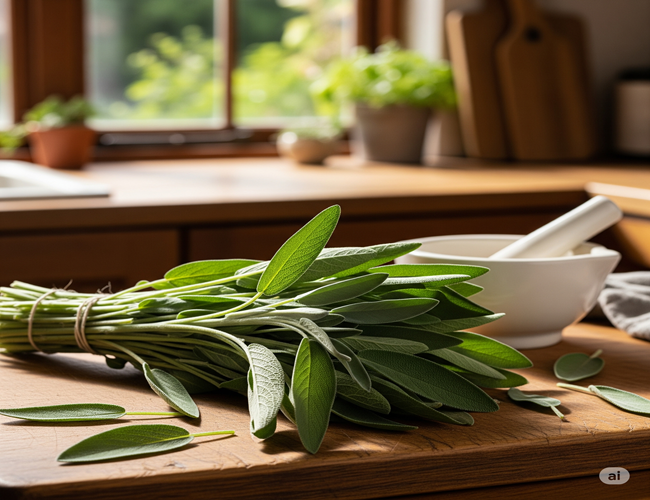
Sage is a perennial, evergreen subshrub with gray-green leaves and a strong, aromatic flavor. Its name, derived from the Latin 'salvere' meaning 'to save,' reflects its long-standing reputation as a healing herb. It is a key ingredient in many cuisines, but its traditional use as a medicinal plant is just as significant.
Sage contains a variety of beneficial compounds, including antioxidants, anti-inflammatory agents, and antimicrobial substances. It is particularly effective as a gargle for treating sore throats and mouth ulcers, thanks to its astringent and antiseptic properties. Historically, it was also used to aid digestion and reduce sweating.
Recent studies have also explored sage's potential to improve cognitive function and memory, especially in older adults. It is thought to work by inhibiting an enzyme that breaks down a key neurotransmitter in the brain. Sage can be used fresh, dried, or as a tea, offering a natural way to support both physical and mental well-being.
Ginger is a flowering plant whose rhizome (underground stem) is widely used as a spice and a folk medicine. Its pungent, spicy, and slightly sweet flavor makes it a versatile ingredient in both sweet and savory dishes. Originating from Maritime Southeast Asia, ginger has a long history of use in various cultures for its extensive medicinal properties.
The primary bioactive compound in ginger is gingerol, which is responsible for most of its medicinal benefits. Gingerol has potent anti-inflammatory and antioxidant effects, but it is most famous for its ability to soothe nausea and aid digestion. It can help alleviate morning sickness, motion sickness, and general stomach discomfort by relaxing the muscles of the gastrointestinal tract.
Ginger is also known to help with pain relief, particularly muscle soreness and menstrual cramps. It can be consumed fresh, dried, powdered, or as an oil or juice. Whether brewed into a comforting tea or added to a stir-fry, ginger is a fantastic natural remedy for a wide range of ailments.

Rosemary is a fragrant, evergreen herb native to the Mediterranean region. With its needle-like leaves and woody aroma, it is a popular addition to roasted meats, vegetables, and breads. However, rosemary is more than just a culinary herb; it has a rich history in traditional medicine, where it was used for everything from improving memory to soothing muscle aches.
The health benefits of rosemary come from its high concentration of antioxidants and anti-inflammatory compounds, such as rosmarinic acid and carnosic acid. These compounds help neutralize harmful free radicals in the body and reduce inflammation. Rosemary is also known to stimulate circulation and has been traditionally used to improve digestion and relieve gas.
Rosemary's strong scent has also been linked to cognitive benefits, with studies suggesting that inhaling its aroma may improve concentration and memory. It can be used fresh or dried in cooking, brewed into a tea, or used as an essential oil for aromatherapy. Its diverse properties make it a truly versatile and beneficial plant.


